I am not a scientist. I want to just say that right now, in the beginning. But I'm a body, and so are you.
Science takes what's inside your body and turns it into data and objects we can study on the outside from a distance. But what gets lost in this process is the felt sense of ownership over the data and the body it came from.
I'm a designer who's interested in how we can address the science literacy gap and the attack on science by making data feel more intuitive and connected to our physical bodies. I felt the most honest way to do that was to use actual scientific data. Enter AlphaFold.
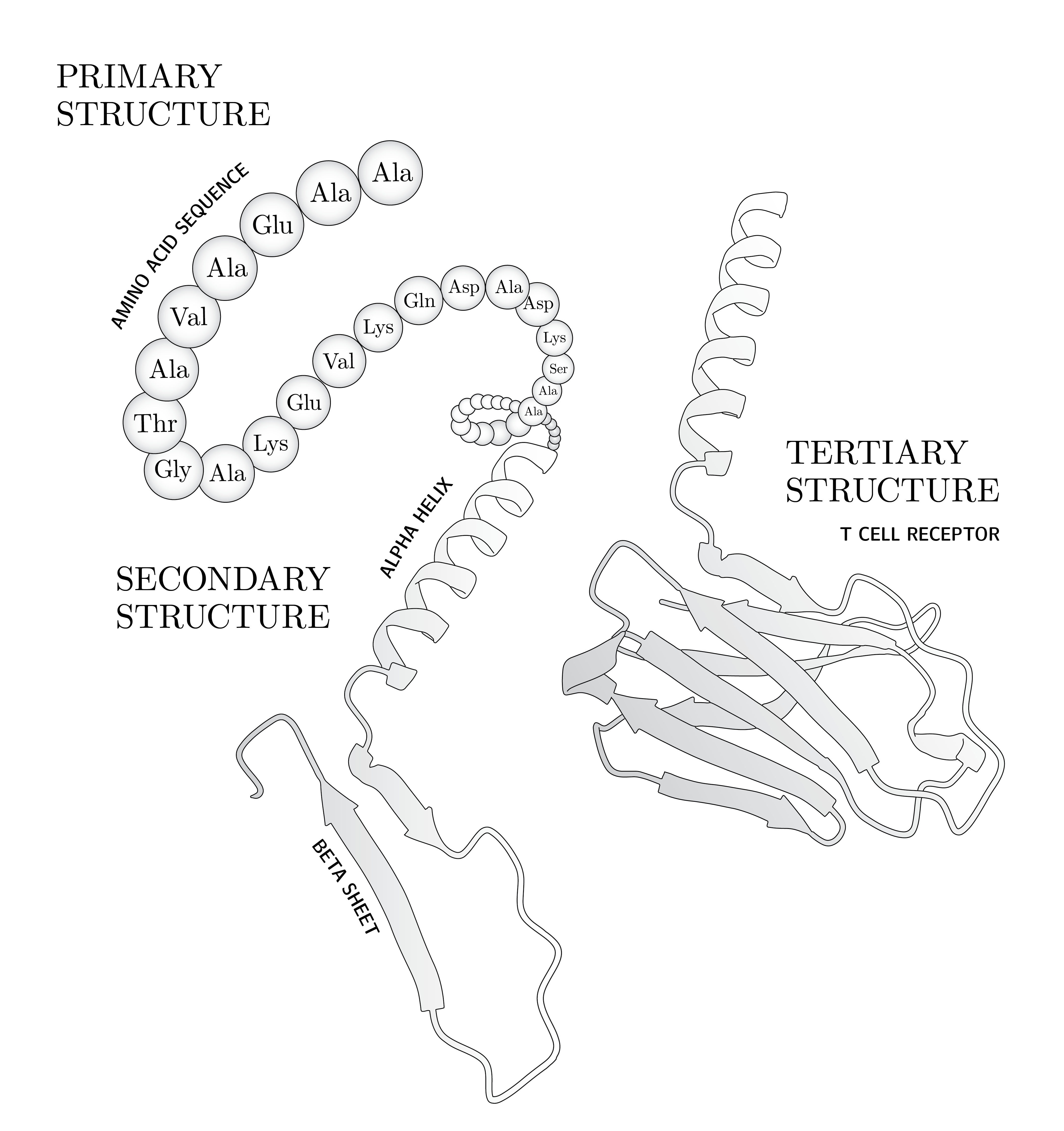
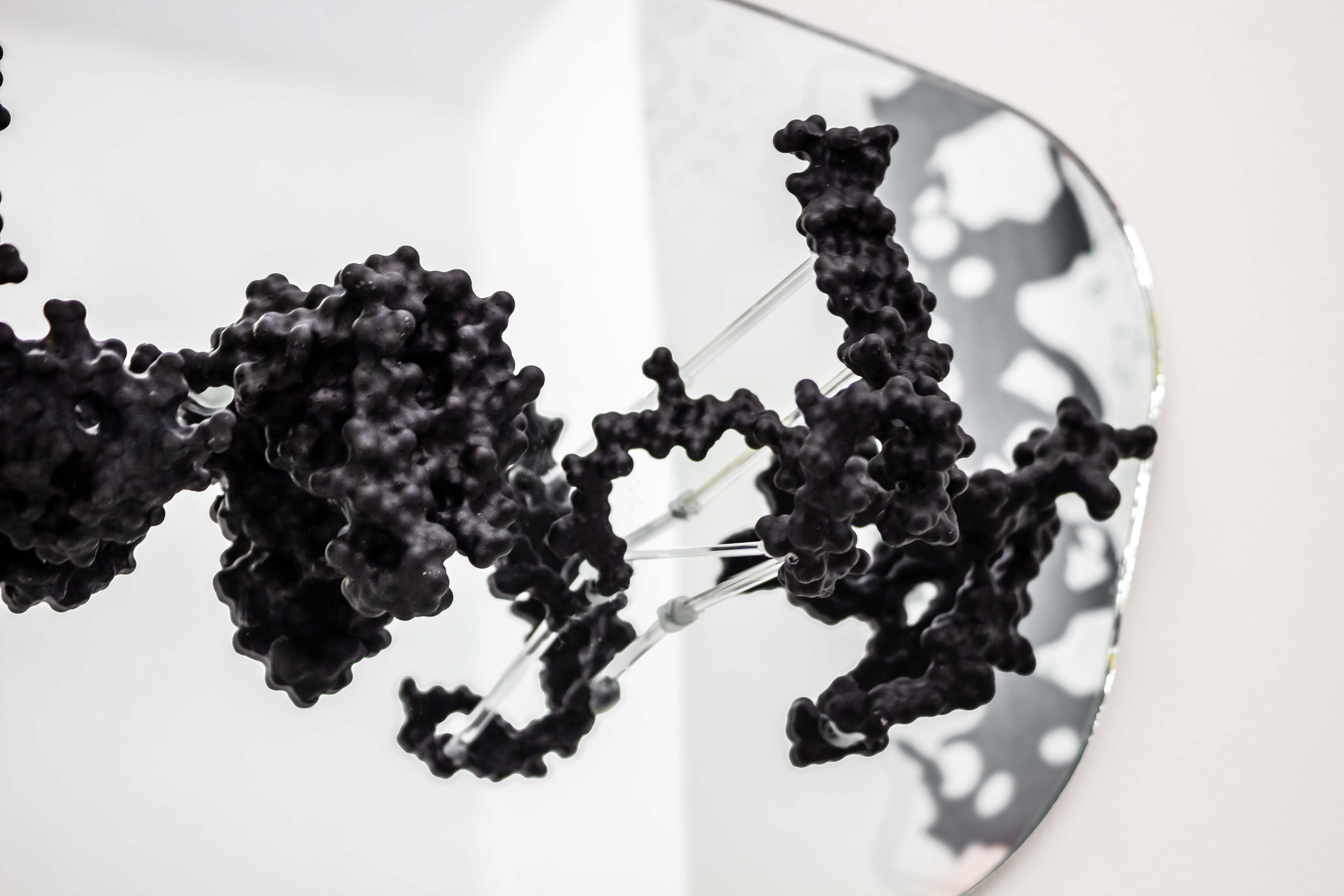
Inside your body, billions of little machines are hard at work. They perform important roles all throughout your body, like serving as structural supports, hormones, and enzymes. These amazing machines are proteins, which are made from the same twenty amino acids arranged in different linear sequences.
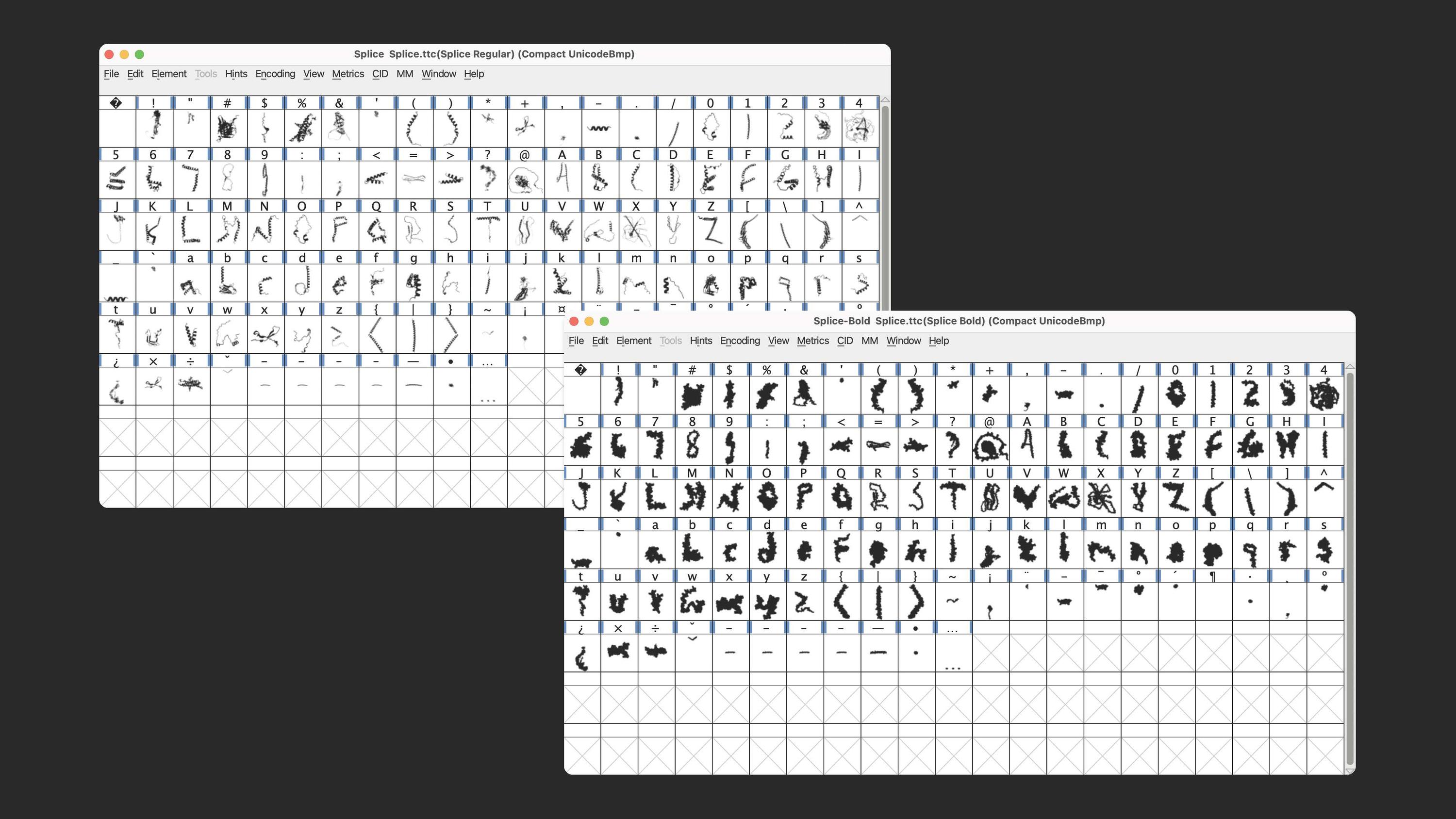
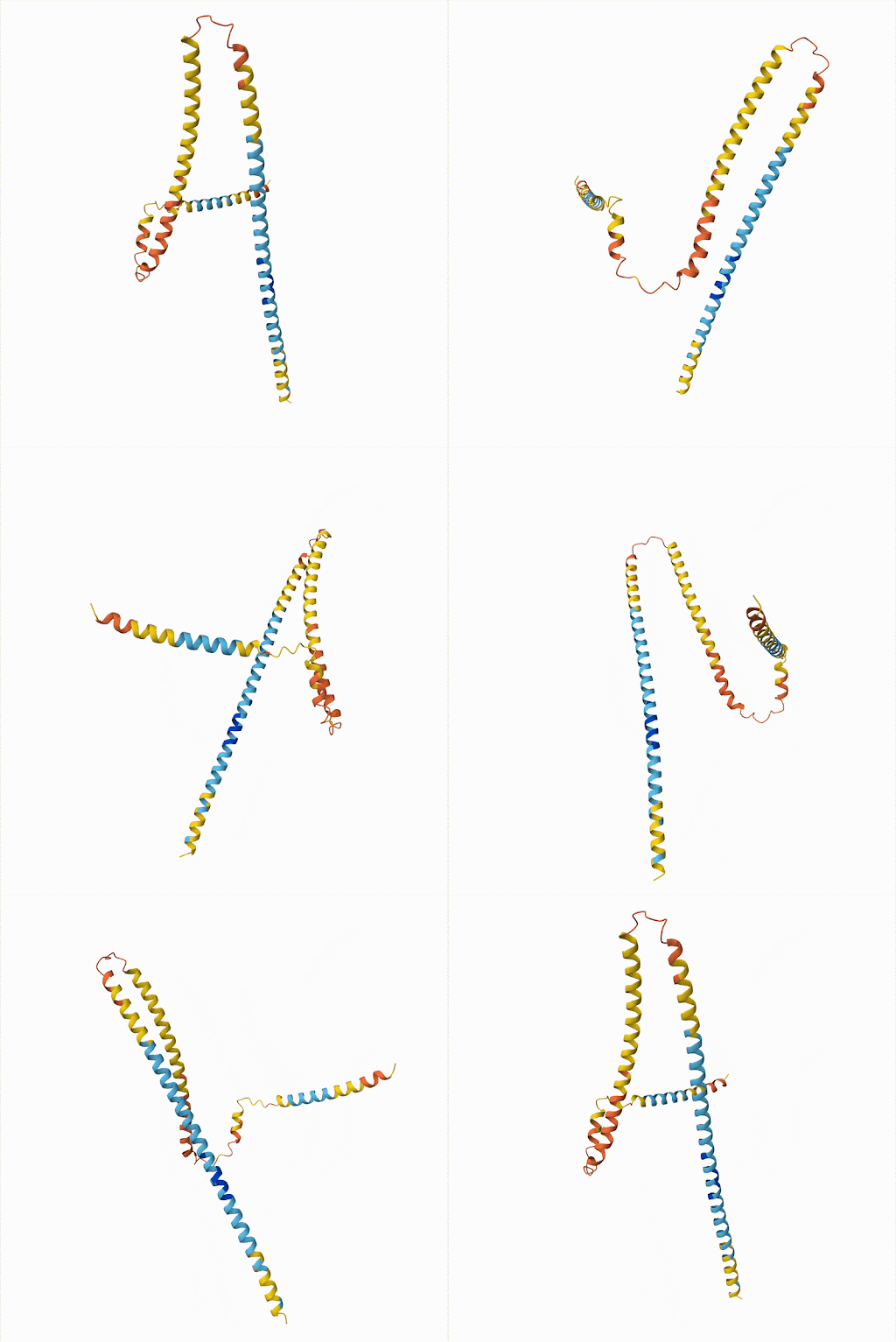
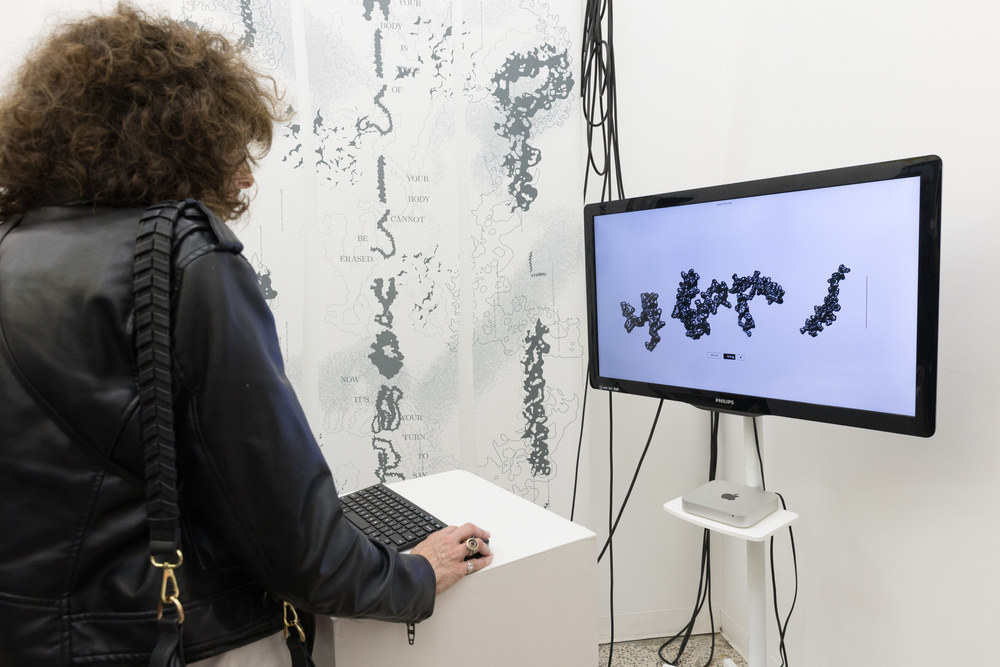
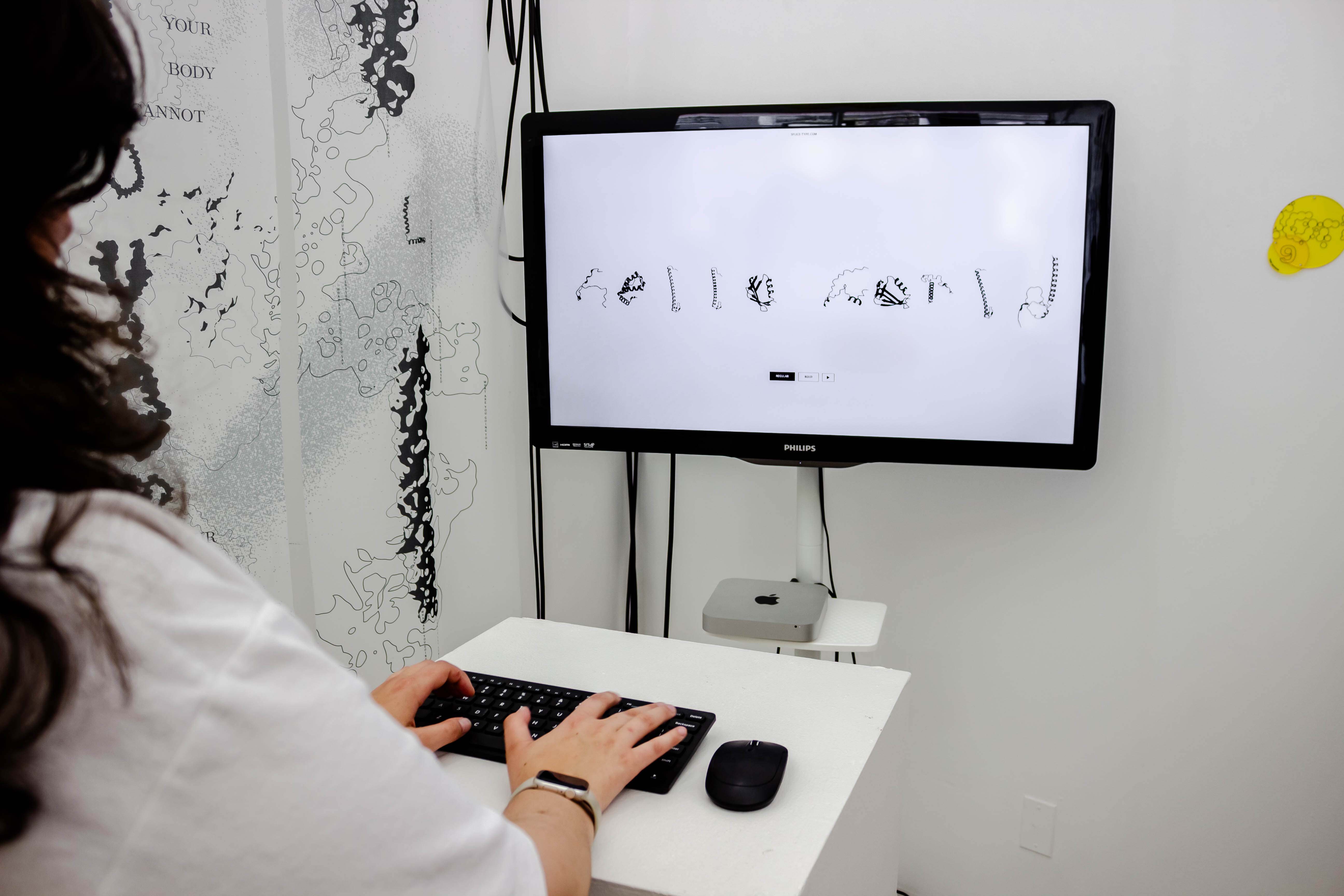
Each glyph in Splice originates from a predicted human protein structure from AlphaFold's Protein Structure Database. Nothing was drawn by hand — all letters emerged from existing biological forms. Each letter in this typeface only becomes legible from a particular point of view.
Splice is not finished. The typeface is complete, but the question it asks — what happens when scientific data stops being institutional and starts being personal — is one that design is only beginning to answer. The proteins in Splice have been in your body your entire life. They will continue to be, regardless of what happens to the databases that describe them or the funding that supports the research.